Showing posts with label Mitt Romney. Show all posts

Wednesday, January 22, 2014

Ohio, the Battleground States, and Candidate Visits During the 2012 Presidential Election

Here is some travel data from the 2012 presidential election. As you can see, Ohio led the way in combined candidate travel, followed by Virginia, Florida, Iowa, and Colorado.

Battleground state travel for 2012:

Obama Biden Obama-Biden Total Romney Ryan Romney-Ryan Total Campaigns Combined
CO 15 1 16 7 8 15 31
FL 15 4 19 13 9 22 41
IA 12 3 15 11 7 18 33
MI 2 0 2 2 1 3 5
MN 1 0 1 0 1 1 2
NV 10 1 11 5 4 9 20
NH 7 1 8 6 2 8 16
NM 1 0 1 1 0 1 2
NC 5 1 6 3 0 3 9
OH 21 3 24 15 16 31 55
PA 2 0 2 4 2 6 8
VA 21 3 24 11 9 20 44
WI 8 3 11 3 3 6 17


First term travel by POTUS to Ohio has steadily increased since the early 1980s:

Reagan 9
Bush 41 18
Clinton 18
Bush 43 30
Obama 37

Saturday, January 26, 2013

Gerrymandering Future Presidential Elections


Every decade in years ending in zero, as mandated by the U.S. Constitution, the U.S. House of Representatives is reapportioned to account for population shifts within the country. As part of that process, many states choose, and some are forced, to redraw or redistrict the legislative lines of both the state and U.S. congressional districts. If this process proceeds in a state dominated by one party and not subject to a non-partisan commission, it usually results in obvious and exaggerated partisan gerrymandering—lines drawn to benefit one political party at the expense of the other. This process is considered constitutional as long as it does not harm the interests of minority or ethnic groupings.

Such was the case in Ohio, a state carried by Democrat Barack Obama in 2008 and 2012, and a state where 38% of voters in 2012 identified as Democrats (compared to 31% identifying as Republican) according to 2012 exit polls. Because of the gerrymandered congressional redistricting process carried out by the Ohio Republican Party in the Buckeye State in 2011, 12 of Ohio’s 16 (or 75%) U.S. congressional districts are held by Republicans representing relatively safe districts. Ohio voters have little chance to affect the outcome of congressional elections during the general election season. Most observers know, before the election even occurs, which party will win which congressional district. Regardless of which party benefits from gerrymandering, such a situation in a swing state like Ohio is an abomination. Ohio is not alone and a number of states were gerrymandered in an extreme fashion in 2011 (including Illinois which had Democrats drawing the lines).

As harmful to representative democracy as gerrymandering of legislative districts is, a new movement to essentially gerrymander future presidential elections is beginning. In a number of swing states in which the state legislature and gubernatorial office is controlled by the GOP, efforts are beginning to change the way electoral votes would be won and accounted for. In all states except Maine and Nebraska, electoral votes are currently awarded in a winner-take-all format—i.e., whichever presidential candidate wins the popular vote in a particular state wins all the electoral votes. However, in a number of battleground states such as Ohio, Pennsylvania, Michigan, and Wisconsin there have been rumblings from GOP elected and election officials that perhaps it is time to alter that accounting method. In Virginia, a full-fledged effort is underway. Why? Because these swing states, despite their swing state status, have been trending towards the Democratic Party for a number of years and all were won by Obama in the last two elections. By shifting the awarding of electoral votes from a winner-take-all format to one based on the winner of gerrymandered congressional districts, a state party could alter the outcome of a presidential election in that state and potentially change the outcome of the presidential election in the country.

Using Ohio as an example, had such a congressional district system been in place for 2012, President Obama would have received just six of Ohio’s eighteen total electoral votes—he carried the four Democratic districts and would have received two more electoral votes (representing Ohio’s two senate seats) for carrying the whole state. Add up potential electoral vote losses in other swing states for Obama and it is a matter of basic arithmetic that the 2012 electoral vote total would have been much closer than the 332-206 result. In fact, Huffington Post crunched the numbers for the entire country. In 2012, had all states utilized the congressional district method currently used by Maine and Nebraska, the electoral vote result would have been: Obama 265 - Romney 273. This despite the fact that Obama would have won a clear popular vote victory. 

Will this effort to gerrymander the presidential election succeed? With media attention and increased public awareness, such schemes to game future presidential elections will likely fail. But it is unclear whether this issue will receive the attention it deserves over the next three years to stave off a successful effort.

Thursday, November 29, 2012

The Obama-Romney Post-Election Meeting: No Bromance Expected


Politico Arena Topic: A Romney-Obama Friendship?

The meeting between Governor Mitt Romney and President Barack Obama is the political equivalent of two head coaches of rival sports teams shaking hands after the conclusion of a heated game. Just like the Yankees and Red Sox or Packers and Bears, the handshake means nothing except to signify that at the end of the contest, the combatants can be somewhat civil towards each other but the rivalry will continue.

Unlike John McCain who continued in his capacity as a U.S. Senator following his 2008 defeat, Mitt Romney has no position in government and thus will have absolutely no impact on policy or politics. Democrats won’t need to listen to him and Republicans won’t want to.

I also do not foresee Obama and Romney becoming bosom buddies down the road as Gerald Ford and Jimmy Carter or George H.W. Bush and Bill Clinton did. The 2012 election was a particularly bitter contest (not that all presidential elections aren’t tough) and both candidates seemed to have a high level of disdain for one another. In the end, the meeting will make for a nice photo-op but will disappear quickly from the public consciousness as focus will turn back to the fiscal cliff Washington is staring at through the windshield.

Permalink to Politico Arena comment

Wednesday, October 24, 2012

The "War on Women," the Gender Gap, and the 2012 Election


Politico Arena Topic: Will Mitt be damaged by Mourdock's rape comment?

Governor Mitt Romney was already in a bind over his “binders full of women” comment after the second presidential debate at Hofstra University. The gap that he had seemingly been closing among women in this country started to widen after that slip-up. But the latest volley in the “war on women” could blow that gap wide open.

Indiana Republican Senate candidate Richard Mourdock’s comment on October 23 in a debate that rape is “something that God intended to happen” is as abhorrent and ridiculous a statement as one could utter and just the latest controversial comment on women that Republicans have offered up (hey Indiana Republicans—you sure you don’t want to bring back Senator Richard Lugar, a person as intelligent and respected as any person currently serving in Congress?).

If Mourdock’s comments were an isolated incident, it may not have had an impact. But starting with Conservative talk show host Rush Limbaugh’s comments this spring that Georgetown law student Sandra Fluke, who testified in front of Congress on the topic of contraception, was a “slut” and “prostitute,” it’s been a pretty tough year for the GOP on women’s issues.

Missouri Republican Senate candidate Todd Akin’s comment in August that “If it’s a legitimate rape, the female body has ways to try to shut that whole thing down” has put the modern Republican Party’s views on abortion and women firmly under the media microscope and at the center of the 2012 presidential campaign. Akin has since compared his female opponent, Senator Claire McCaskill, to a dog at a recent fundraiser, and subsequently news has broken that he had been arrested several times in the past at the scene of abortion protests.

And Akin and Mourdock are not isolated cases. U.S. Representative Joe Walsh, a freshman from Illinois running for reelection in a very tight race, said in a recent debate that he was against all abortions without exception, even when the mother’s life was at stake because “with modern technology and science, you can’t find one instance….There is no such exception as life of the mother, and as far as health of the mother, same thing.”

So how does Governor Romney repair the damage? After all, Governor Romney enthusiastically endorsed Mourdock in his senate bid. I don’t think he can at this point. His only hope is that his advantage among men is bigger than his gap among women, a prospect that is highly unlikely.

Permalink to Politico Arena comment

Thursday, October 18, 2012

Romney in a Bind(er) with Women


Politico Arena topic: Will women overlook Romney's 'binders' comment?

Women are one of the key demographic groups in the 2012 election. They vote at a higher rate than men—they composed 53% of the electorate in 2008 and 54% in 2004. In 2008, Senator Barack Obama was able to win the White House largely because of a 13 point margin among women. Senator John Kerry lost narrowly in 2004 largely because the gender gap closed to only 3 points. Until President Obama underperformed in the first presidential debate, he enjoyed a very large advantage among women ranging from 10-20 points in public opinion in many surveys. That gap narrowed in the days following the debacle in Denver.

Governor Mitt Romney’s comment in the second presidential debate that in an effort to find qualified women for his gubernatorial administration he collected “binders full of women” has been panned and it’s veracity questioned. Besides becoming a hash tag sensation on Twitter and fodder for late-night comics, political observers have brought new focus to Governor Romney’s policies on gender. And that focus has revealed positions that are sure to enlarge the gender gap. Mitt Romney’s position on the Fair Pay Act of 2009 (Lilly Ledbetter), the first piece of legislation signed into law by President Obama, has been: I’ll get back to you. His shifting positions on contraception and abortion from when he was a candidate for the U.S. Senate, to when he was Massachusetts governor, to when he was a Republican primary candidate, to when he was a general election candidate, can be described as nothing but Etch-a-Sketch.

But perhaps Governor Romney’s biggest problem is his own party. The modern Republican Party is openly hostile to women’s rights on a number of issues. From opposition to legislation mandating equal pay for equal work for women, to support for legislation in numerous states mandating transvaginal ultrasounds for women seeking abortions, to a Republican Party platform that says no abortions, no exceptions, many believe the GOP is on the wrong—and extreme—side of women’s issues. Governor Romney’s biggest problem with America’s women is being the nominee of a party viewed as wildly out of touch with the mainstream values of a majority of those women. Proudly carrying the banner of Republican Party orthodoxy on gender issues may be fine in a primary battle, but is very problematic in a general election and may well cost Romney the White House come election day.

Permalink to Politico Arena comment.

Monday, October 8, 2012

VP Debate 2012: High Expectations and Underestimating the Opponent Can be Perilous


Politico Arena Topic: Could Biden hit Ryan too hard?

There is no question that Team Obama needs a solid debate performance from Vice President Joe Biden in the VP debates. After a week of stories following President Barack Obama’s weak performance at the Denver Debate, a strong Biden showing would help staunch the bleeding. Democrats hope that Biden can land some punches and counter-punches on the Romney-Ryan agenda that President Obama failed to land or even throw. Especially facing the architect of the GOP’s budget, Biden will be expected to take Representative Paul Ryan to task for his plans on Medicare, Social Security, and a host of other controversial policy ideas.

The Vice President has one very large advantage going into the October 11 debate: expectations are very low for him. Known for his verbal gaffes, Biden is neither feared nor respected by Republicans, particularly by the VP nominee himself. Long-time Republican strategist Ed Rollins epitomizes this view when he told Fox News this summer that Ryan “is going to wipe up the floor with Biden in the debates.” However, high expectations and underestimating your opponent can be perilous heading into a debate—just ask Team Obama.

Permalink to Politico Arena comment

Wednesday, August 29, 2012

Mitt Romney and the Challenge of Being Likable


Politico Arena Topic: Was Ann Romney's Convention Speech a Game-Changer?

Ann Romney’s speech highlighted what we already knew—that she is a decent speaker who could potentially play the role of first lady effectively. The speech was by no means a “game changer” however. The most important speech of the convention has yet to happen. Mitt Romney’s speech will be the most watched, observed, and dissected speech at the GOP convention. Like any nominee trying to knock off an incumbent president, Governor Romney must demonstrate that he offers a different and better vision for America than the current president. He must convince wavering independents and Obama supporters from 2008 who are having buyer’s remorse to come to the Republican side. His task is made more difficult by the hard right stances of the Republican Party platform and utterances of GOP office holders and candidates in recent weeks that have received such negative publicity with the potential to turn off moderates and many women. Romney’s own sprint to the right during the GOP nomination process and his selection of running mate Paul Ryan with his unwavering social conservatism no doubt complicate this process.

Perhaps most challenging for Romney is that he must connect with the average American. The likeability gap between President Obama and Governor Romney is very real—he must close that gap as much as possible if he is to win the election. Americans prefer to cast a vote for someone they like. A candidate perceived as aloof and not being able to identify with the middle class of the country will struggle in the end. So Mitt Romney’s biggest challenge is to achieve what Ann Romney attempted to do last night—to convince America that despite his privileged upbringing and sheltered life, he can identify with the hopes, dreams, challenges, and struggles of everyday Americans. Perhaps most importantly, he must demonstrate that he actually cares about those same people.

Permalink to Politico Arena comment

Saturday, August 11, 2012

Paul Ryan: An Unconventional VP Choice for a Conventional Campaign


Politico Arena Topic: Is Paul Ryan a Good VP Choice?

Rep. Paul Ryan (R-WI) is an unconventional choice for a vice presidential running mate and certainly qualifies as a “bold” one. Time will tell if it is a good pick. Not many individuals from the U.S. House are chosen for the #2 slot—the last time that happened was 1984 with Walter Mondale’s selection of Geraldine Ferraro. House members usually lack the visibility and experience on the national stage that a senator or governor possess. But Ryan is different. He has become one of the leading voices of the new Republican Party—one of the 40-something “young guns” redefining the party’s brand of fiscal conservatism. He is a wonkish Gen Xer—a stark contrast with the man who picked him. Ryan is bright and has spent most of his adult life on Capitol Hill, including nearly 14 years as a member of the House—no Palin problem here (you can’t see Russia from his Janesville District but on a clear day you may be able to see Rockford).

The “Ryan Budget,” with its blend of fiscal austerity and massive cuts to the domestic safety net combined with compassion for the top earners and DoD, will now become a central focus of the campaign. To a great extent, this is something both liberals and conservatives relish—a real debate about the future priorities and values of the American economy. And up to this point, it is something the Romney campaign has been loath to explore in any way but the most vague and vacuous. That will now change.

From an Electoral Map perspective, the Ryan pick may put Wisconsin back in play—a state where President Obama has had a consistent if small lead in the polls throughout the campaign. Ryan’s Catholic upbringing and social conservatism will help the Romney campaign with Midwestern Catholics and perhaps other religious conservatives still uneasy about Romney’s faith. Without a doubt the Ryan pick energizes a GOP base sorely in need of energizing. Ryan gives the base a reason to vote FOR Romney instead of just AGAINST President Obama. But Ryan is a double-edged sword—those very reasons he may energize the base may be the same reasons he turns off independents and seniors in crucial swing states. The Obama campaign will not miss an opportunity to remind seniors in Florida, Pennsylvania, and Iowa—three of the top five states in terms of proportion of seniors per capita—what the Ryan Budget means for the future of Medicare. Thus, putting Wisconsin in play may ultimately come at the expense of handing Florida to Barack Obama in 2012—a trade the Obama campaign would make any day.

Permalink to Politico Arena comment

Tuesday, August 7, 2012

Veepstakes: The Case for Portman


Politico Arena Topic: Romney's Running Mate

Picking a running mate is the most important decision a presidential candidate can make. After all, they are not the president yet; they cannot order a military strike on a foreign country, cannot send American soldiers into harm’s way in a foreign land, cannot issue executive orders or sign bills into law. About the only thing of consequence a presidential candidate can do is pick the individual who will serve as their deputy should they be elected. It used to be that the vice presidential position was so inconsequential that it was the place where political careers went to die. In the modern presidency, however, vice presidents have become an important component of the presidential administration and a trusted adviser to the president. But the most important role of the vice president has remained timeless—to be ready to take over in the event that death or disability strikes the president. This transition has happened eight times in our history due to the death of the president and once due to resignation. However, too often in American history, presidential candidates (or the party machine in days gone by) have failed to ask a fundamental question when considering the person who will be only a heartbeat away from the presidency: is this person qualified and competent to be president in their own right?

With the pressure to win being paramount, running mates are often chosen because of geographical and ideological reasons, qualifications and competence be damned. Senator John McCain’s recent defense of his own 2008 decision aside, Sarah Palin was not qualified to be president. The world held its collective breath in 1992 when President George H.W. Bush collapsed in Japan as, just for a moment, the thought of “President Dan Quayle” took hold. And Spiro Agnew’s resignation as vice president after a lengthy investigation into his ethical and legal misdeeds allowed the country to avoid an even bigger Constitutional crisis when his boss Richard Nixon resigned a year later. These examples should cause presidential candidates to pause and reflect during the search for their running mate.

And so that brings us to Governor Mitt Romney’s decision about his own running mate. The usual cast of characters have been mentioned for months as speculation has continued nonstop since the spring: Chris Christie, Bobby Jindal, Tim Pawlenty, Rob Portman, and Paul Ryan. I do think it will be somebody from this group. All of these folks are relatively safe—there is not a Palin in the bunch. If the 2012 election were a football game, it is likely to be decided by a field goal, not a touchdown. Thus Romney does not need a Palinesque Hail Mary; rather, a short, high-percentage pass down field to get him into field goal range would be much more helpful. And Romney does not seem to be a gambler anyway—he is much more Aaron Rodgers than Brett Favre.

Given this, my gut and my head scream Rob Portman, the Ohio Senator no one knows much about. In terms of geography, Portman comes from perhaps the most important state of all in 2012—Ohio. No Republican has ever won the presidency without winning Ohio and only twice since 1896 has a Democrat achieved that, the last time being 1960. You win Ohio, you win the presidency. Portman, a longtime member of the U.S. House from Southwest Ohio, would help Romney in the state. Portman’s only downside in the Buckeye State is that he is relatively unknown to most Ohioans. But that is what a campaign is for and by the time November rolled around, most Ohioans would have an idea of who Portman is. Ideologically, Portman is a conservative, but not the kind of flamethrower that would turn off independent, swing voters. He is a soft spoken, pleasant, policy-wonkish individual that has proven he can work with individuals across the ideological and political spectrum. He will not excite the base in a Palineque sort of way, but he will not turn them off either.

And if Governor Romney considers the competent/qualified question I laid out above, no one on the list of frontrunners for veep comes close to Portman. He is absolutely qualified to be president—in fact much more so than Governor Romney himself. His resume, filled with a variety of experiences in the White House and on the Hill, is as strong as any president since George H.W. Bush. Besides spending 12 years in the U.S. House of Representatives and currently serving in his first term as a U.S Senator, Portman has held a variety of positions in the administrations of both Bushes including as an Associate White House Counsel, director of the White House Office of Legislative Affairs, U.S. trade ambassador, and director of the Office of Management and Budget. This is a better resume than most presidential candidates and if Romney fails to capture the White House in 2012, Portman would have to be considered a likely POTUS candidate in 2016. Romney, of course, may choose to go in a different direction. But if he is serious about picking the best person for the job, he need not look beyond the Buckeye State for his veep.

Permalink to Politico Arena comment

Wednesday, July 18, 2012

Romney's Tax Returns and the Politics of Perception


Politico Arena Topic: A Taxing Dilemma for Romney?

In 1968, Republican presidential candidate George Romney initiated the practice of releasing tax returns by making 12 years available to the public. Forty-four years later, his son, Mitt Romney, reluctantly made available only 1 year and that was only after withering criticism from his GOP rivals for the nomination. In 2008, when he was being vetted as a running-mate, Romney handed over 23 years of returns to the McCain campaign. No one knows for sure what the McCain people saw, but we are certain that Romney was not chosen.

By not releasing more returns, Romney leaves the impression that he has something to hide. Maybe he does, maybe he doesn’t. But in politics, perception is reality, especially at the presidential level. During a presidential campaign, transparency is the best policy because the questions will continue and the negative attention will not cease unless the campaign makes a good-faith effort to clear up any questions. Even members of Romney’s own Republican Party are questioning his motives in not releasing more returns—a sure sign that this tax return controversy will only get worse. President Obama did not put the birther nonsense to rest until the state of Hawaii released his long-form birth certificate in April 2011. That contrived controversy has now all but gone away except for the handful of nut jobs and conspiracy theorists like Donald Trump, Joe Arpaio, and Orly Taitz who can’t seem to let it go (and may also believe the world is flat and that the moon landing never happened).

For Romney, it is best to put that information out now, deal with the negative fallout during the summer, and have the issue behind him when he picks his running-mate and goes to the convention. By waiting, he only risks blunting the momentum he will need coming out of Tampa in the sprint toward election day.

Permalink to Politico Arena comment

Thursday, May 24, 2012

The Invisible Massachusetts Governor


Politico Arena Topic: Is Mitt Romney Avoiding Massachusetts?

The Romney campaign seems intent on emphasizing Mitt Romney’s time as a venture capitalist with Bain rather than his time as chief executive of a large Northeastern state (of course, no else is supposed to talk about Romney’s time with Bain). His reticence to highlight his years as Massachusetts governor is indicative of the Romney campaign’s fear of alienating the Republican base who loathe the more moderate actions and policies of Governor Romney. The Romney campaign is reluctant to reminding social and religious conservatives that he was once a supporter of abortion rights and creator of Romneycare upon which the Affordable Care Act is in part based.

So…if Romney is left to campaign without touting his record as governor, he must campaign as the candidate from Bain. The question is: will his record as a venture capitalist capture the hearts and minds of independent voters? The answer is probably not, especially when independent voters, who are largely not paying attention right now, realize that the purpose of a venture capitalist is to make money—lots of it—for investors, and not to create jobs, a top priority for most Americans in 2012. And when these same voters come to realize that Romney’s job creation consists primarily of the stablemen who care for his horses, the domestic help caring for his several homes, and the workers installing elevators for his numerous automobiles, they may switch their allegiance to his opponent faster than you can transfer money into a Cayman Islands bank account.

Permalink to Politico Arena comment.

Tuesday, May 22, 2012

Bain and the Political Street Fight

Politico Arena Topic: Should Democrats Stop Bain Capital Attacks?

“They apparently looted the companies, left people unemployed and walked off with millions of dollars. Look, I’m for capitalism, I’m for people who go in to save a company... if somebody comes in takes all the money out of your company, and then leaves you bankrupt while they go off with millions, that’s not traditional capitalism.” Those were not the words of President Barack Obama but rather Newt Gingrich, one of Mitt Romney’s chief rivals for the GOP nomination, just four months ago. Bain was a major target during the Republican Primary season. So what has changed? Absolutely nothing except that some Democrats are getting squeamish about attacking Romney’s one supposed advantage in the election—his business experience—for fear of angering Wall Street and Corporate America. Here’s a news flash Democrats: they already don’t like you nor trust you, just check the campaign finance records.

The Obama campaign is exactly right to take on Romney’s business credentials by delving into the world of Bain Capital and private equity. After all, Romney touts his business acumen at every campaign stop. And the Obama campaign appears to be on the correct side of public opinion on the issue of wealth in general. In an ABC News/Washington Post poll released today, 56% of Americans agreed that “unfairness in the economic system that favors the wealthy” was a “bigger problem in this country” compared to 34% who felt “over-regulation of the free market” was a more important problem.

Finally, the notion that it is somehow unfair to examine a candidate’s past record is laughable. After all, a campaign should be about the issues and record/experience that each candidate brings to the table. In 2008 (as will be the case in 2012), the Republican Party and McCain campaign had little hesitation inspecting every vote Barack Obama cast and every public utterance he made as a U.S. Senator or Illinois legislator. Obama’s life as a community organizer and even as a student also came under great public examination. Even Sarah Palin, who took so much issue recently with scrutiny of Bain, did not hesitate as John McCain’s vice presidential running mate to accuse Obama of “palling around with terrorists” and other attacks perceived as way out of bounds and simply not true. If the Obama campaign were to give-in to the criticism and relax its investigation of Romney’s record as a venture capitalist, it would be unilaterally disarming.

It is common practice for campaigns to cry foul and argue that attacks by the other side are unfair. The Obama campaign will certainly do the same. However, a presidential campaign is not a high-minded game of chess played over wine and finger-food but rather a street fight fought in a dark alley with sharp implements for the most important office in the land. And just about anything, from Swiss bank accounts to birth certificates, is fair game.

Permalink to Politico Arena comment
 

Saturday, March 24, 2012

Mitt Romney: An Etch A Sketch Candidate in an Era of Permanent Ink

Mitt Romney’s Etch A Sketch moment may be the defining moment in what can only be described as a tumultuous primary season. Romney’s longtime aide Eric Fehrnstrom caused a firestorm of criticism for his boss when he said on CNN that the general election offered a chance to hit the “reset button for thefall campaign. Everything changes. It’s almost like an Etch A Sketch. You cankind of shake it up and we start all over again." When scholars perform their post-mortem of the 2012 campaign, they may be able to point to the Etch A Sketch moment as the precise point in time when Mitt Romney lost the election.

Fehrnstrom’s comments are both illustrative and important in two very different ways. First, Etch A Sketch may well be the last straw for many conservatives who already do not trust Romney. Whether it is Romney’s Mormon faith, the moderate policy positions he cultivated as Massachusetts Governor, or the air of inauthenticity that clings to Romney like an ill-fitting suit, conservatives have never embraced him. The Etch A Sketch comments validate the feeling among conservatives that Romney has no core, that he is a political chameleon who will do or say anything to win, that he is not one of them. Etch A Sketch may not cost Romney the nomination, but it could very well cost him the general election should he be the Republican Party nominee. The first order of business for any presidential campaign is to turn out the base in November. And if part of the GOP base decides to stay home rather than vote for their party’s candidate that they view as a charlatan, especially in crucial battleground states like Ohio and Virginia, Romney cannot win.

Secondly, the Etch A Sketch comments reveal that the Romney campaign is utilizing a playbook that is outdated in the 21st Century. There is no reset button in presidential politics—not anymore. The ubiquity of social media means that the lines drawn on the Etch A Sketch during the primary season are drawn in permanent ink. You can shake the toy as much as you like but the lines will still be there. Every event is recorded. Every speech, every public utterance, every awkward joke lives on in perpetuity, only one Google search away from being the next viral campaign ad run by the opposition. I’m pretty sure that the Obama campaign is adept at navigating that series of tubes we call the Internet, collecting for later use every Romney misstep, gaffe, and controversial statement from tree height to Cadillacs to Planned Parenthood. In 2012, a candidate can no longer tack to the extremes of their party during the primary season only to sprint to the middle during the fall campaign without repercussion. The social media microscope—often primed by a well-conceived 140 character tweet—makes that impossible.

Permalink to Politico Arena comment 

Wednesday, March 21, 2012

Mitt Romney: Trouble Signs Ahead


Politico Arena topic: Does Romney's Win Make the Nomination Clearer?

Mitt Romney’s win certainly helped boost his chances of securing the GOP nomination. Illinois represents his first convincing victory in a large industrial state—the kind of battleground state Romney would need to win in a general election matchup against President Barack Obama (though Obama should be able to carry Illinois easily in November). But underneath the veneer of his Illinois win rests some continuing trouble signs. According to exit polls, Romney lost the white evangelical vote once again to Rick Santorum. Evangelicals compose much of the Republican Party’s base across the United States—a base Romney must turnout in droves in November if he is to defeat Barack Obama, especially in battleground states like Iowa, Ohio, North Carolina, and Virginia. But evangelicals have yet to embrace him. Romney also lost among protestants who attend church weekly, those that maintain that the religious beliefs of the candidates matter a great deal, those who said they were looking for a true conservative, and those that said they wanted someone with strong moral character.

Is this enough to sink Romney’s nomination campaign? That’s not likely at this point as his superior organization and deep pockets give him an advantage in the delegate count in what has become a nomination season marathon. However, in the general election, a party’s nominee has to motivate the base and it is not clear whether the GOP base will be motivated by a guy that they don’t view as a true conservative. A certain percentage of those base voters, though they are unlikey to cast their ballots for Obama, may stay home on election night—a situation Romney could not afford in so many of the swing states he would need to carry.

Permalink to Politico Arena comment

Monday, March 5, 2012

Rush Limbaugh and the Death Spiral of Incivility

Politico Arena Topic: Has the 'War on Women' Gone Too Far?


Rush Limbaugh crossed the line last week with his offensive statements about Sandra Fluke, a Georgetown Law Student and Democratic activist. But crossing the line is nothing new for Limbaugh—he has a long and sordid history of attacking women, minorities, and Democrats. The guy is a school yard bully with a large megaphone.

I am heartened by the fact that many of his advertisers have pulled their ads—they clearly saw Limbaugh’s venom affecting their bottom line. Some like Carbonite CEO David Friend saw the moral debauchery in Limbaugh’s comments noting that Limbaughoverstepped any reasonable bounds of decency.” However, I am disappointed but not surprised that so many of Limbaugh’s fellow conservative commentators have not only stood by his side, but have chosen to follow Limbaugh’s lead in attacking Ms. Fluke and women in general.

And where has the Republican Party been? Some, like Sen. John McCain (R-AZ), have belatedly criticized Limbaugh’s comments, but GOP lawmakers are not exactly sprinting to the microphone to publicly repudiate him. As George Will said Sunday on This Week, “Republican leaders are afraid of Rush Limbaugh. They want to bomb Iran,but they’re afraid of Rush Limbaugh.” To top it off, we get Mitt Romney, the GOP presidential front runner, who gives Americans a half-hearted—“it’s not the language I would have used”—in discussing Limbaugh’s discourse. (So what language would he have used? Harlot? Strumpet?) What a tremendous missed opportunity. Romney could have demonstrated his moral backbone by publicly smacking Limbaugh. But Romney, like many in the GOP, are simply afraid of offending Limbaugh’s mythical audience or being on the receiving end of Limbaugh’s future tirades.

Perhaps what is most disheartening is this episode demonstrates once again that our politics are gripped by an ugliness and mean-spiritedness that pushes the bounds of basic decency. As a country, we seem to be in a death-spiral of incivility that wounds the body politic and makes it increasingly difficult for our institutions to govern. Politicos and members of the media across the ideological spectrum will need to publicly and forcefully repudiate the destructive speech of personalities like Rush Limbaugh in the future if we are ever, as a country, to escape the spiral.


Permalink to Politico Arena comment


Wednesday, February 1, 2012

Too Early for Romney Campaign to Pop the Champagne Corks


Politico Arena Topic: Is Mitt Romney the Republican Nominee?

There is no question that Mitt Romney had a good night. He resumed his status as frontrunner.

But before the Romney campaign starts popping the champagne corks, there are some troubling clouds gathered over the Florida landscape. Though Romney swept most of the CNN exit poll categories, Newt Gingrich was the first choice among evangelicals, tea party folks, and those that identified as “very conservative.”

These people have always been Romney’s Achilles heel and that pattern continued in Florida. Turnout was also down significantly - about 10 percent or 280,000+ GOP voters - from 2008. These factors indicate that the conservative base has yet to warm to Romney. Yes he has a huge advantage in money. Yes the outside groups supporting him also have deep pockets and are clearly willing to unleash the negativity on Gingrich and other rivals. However, until Romney solves his problem with conservatives, particularly those on the Religious Right, the GOP primary will last for several more weeks - especially heading into Super Tuesday and beyond where a number of Southern states will hold primaries - the kind of political landscape Gingrich should do well in.

More importantly, should he be the nominee, unless Romney solves his conservative problem, he will struggle in the general election where you must turn out your base in order to have a chance at winning. The fact that Florida GOP voters stayed home in droves yesterday indicates a base that has yet to warm - any may never warm - to Romney or his fellow GOP candidates.

Permalink to Politico Arena comment


Thursday, January 5, 2012

Romney and Iowa: When a Victory is Not a Victory

Politico Arena Topic: Iowa a win, loss, or draw for Romney?

Mitt Romney’s eight vote margin of victory is very disappointing for a candidate with a huge edge in money and name recognition. His 2012 vote percentage (25%) was roughly the same as 2008—this despite the fact that he never stopped campaigning for president. Romney is a flawed frontrunner who cannot break through with conservatives. He will likely do well in New Hampshire given the fact that he owns a home there (of course, where doesn’t he own a home?) and was governor of a neighboring state. South Carolina, however, will represent a huge reality-check for Romney where conservatives will rule the day.

The real story of the night was the performance of former Pennsylvania Senator Rick Santorum. Not exactly a household name among the Republican electorate, Santorum had very little cash or organization. His late surge in the polls and surprise tie is evidence that conservatives are desperately searching for an alternative to Romney. Other conservatives such as Michelle Bachmann, Rick Perry, Herman Cain, and Newt Gingrich peaked early but faded because they had too many personal or professional peccadilloes. Santorum was aided by good timing, peaking at the right time. His tie will mean that the bright lights will now shine on Santorum and we’ll see how he holds up. Santorum’s strong performance also will translate in to cold hard cash as conservatives will open the checkbook for their new standard-bearer, especially if Perry and Bachmann have been knocked out of the race.

Finally, Representative Ron Paul’s strong third place showing gives him momentum going to New Hampshire where independents and more moderate voters will buoy his campaign. Paul’s supporters are the most loyal of any of the candidates in the GOP field and Paul is in the race for the long haul. In fact, a third-party or independent general election candidacy for Ron Paul is a significant possibility if he continues to perform well in the primary season but falls short of the GOP nomination.

Permalink to Politico Arena comment

Thursday, October 27, 2011

Marco Rubio and the Klieg Lights

Politico Arena Topic: Is Marco Rubio Still VP Material?

Sen. Marco Rubio will be a top contender for a VP slot. He is a Republican young gun who is a darling of the tea party. He is a first-generation American whose parents came from Cuba and Republicans are desperate to make inroads in the Hispanic community - the second largest and fastest growing ethnic group in the United States. Florida is a must-win battleground state and Rubio would give the GOP ticket an edge there. And if Mitt Romney is the nominee, Rubio would add some conservative credibility that Romney lacks.

The big question is: would this freshman senator be ready for the bright lights and hyper-scrutiny of a presidential campaign? After all, he is only 40 and hasn’t spent even a year in the U.S. Senate. The last time a presidential nominee picked a young, inexperienced, firebrand for the number two slot (Palin), it didn’t go so well as a candidate’s shortcomings are quickly exposed during the harsh glare of the klieg lights of the national stage. Rubio’s embellishment of the story of his parents journey from Cuba indicate that he may not be ready for prime time. Thus, the selection of Rubio as a running mate could be stroke of genius or utter disaster.

Permalink to Politico Arena comment

Monday, October 10, 2011

Playing the Mormon Card

Politico Arena Topic: Will Mormon Attacks Help Mitt?

Mitt Romney’s Mormon religion shouldn’t be an issue but it is and will continue to be. Many religious conservatives do view Mormonism as less than a religion and will never accept Romney as their party’s nominee. Romney will be challenged especially in any number of Southern primaries.

For the Religious Right, it’s not an issue he can overcome simply with a speech. Absent a full-scale conversion, Romney will be forced to write off many of these voters and hope he can dominate in primary states where religion is a less important variable.

Permalink to Politico Arena comment

Friday, August 26, 2011

Throwing Kisses While The Ship Sets Sail


Politico Arena Topic: Has Sarah Palin been eclipsed?

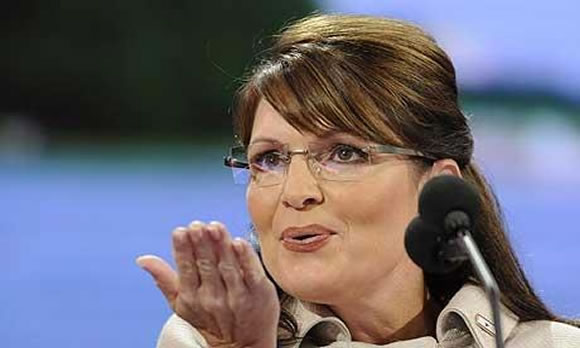
The ship has left the port and is sailing out to sea. Michele Bachmann, Ron Paul, Mitt Romney and others boarded awhile ago. Rick Perry, realizing the ship was leaving, finally jumped from shore and climbed aboard. Sarah Palin, though, is still waving and throwing kisses to the crowd even while the TV crews keep reminding her the ship is moving towards the horizon.

We all know that she claims to live by her own rules, but there are some rules you can’t invent—real tangible ballot deadlines and intangible fundraising windows. A serious candidate for the presidency pays attention to such things. And frankly, even if she were to somehow get on that ship, there may be nowhere for her to stand at this point.

Permalink to Politico Arena comment

White House.gov Photo Gallery Feed

White House.gov Blog Feed

White House Flickr Photostream

Site Meter

WIKIO

Wikio - Top Blogs - Politics

Followers