Thursday, December 16, 2010

Witnessing History Through a Camera Lens


Don Gonyea had a great segment recently on NPR in which he interviewed Shelly Fielman, a cameraman from NBC and member of the White House Press Corps, about his experiences. Fielman began covering American presidents in 1963 and hasn't stopped since. From the Lee Harvey Oswald shooting to the assassination attempt on Ronald Reagan to KKK rallies, Fielman has seen--and recorded--it all.

The interview is well worth listening to in its entirety. Fielman is a walking, breating, working, institution. Without people like Fielman, the rich history of the modern American presidency would not seem as rich.

(By the way, Fielman is holding the middle camera in the picture above in the aftermath of the 1981 assassination attempt on Reagan)

Sunday, December 12, 2010

We're Number 1!!!


How sweet it is. The University of Akron soccer team just won its first national championship--the first championship in any sport for the university. Coach Caleb Porter, who just signed a five year extension on his contract last year, is the top coach in college sports. His winning percentage since taking over Akron's soccer program is unrivaled. How lucky we are to have him.

Saturday, December 4, 2010

The Politics of New START and the Echo of Jesse Helms


The New START Treaty (what should really be called START III), a treaty that would reduce the nuclear stockpiles of the U.S. and Russia to historically low levels, should have sailed through the Senate with bipartisan support. After all, most arms control treaties do just that. Politics stops at the water's edge...at least it used to. Just look at the list of arms control/defense treaties since 1963:

• Limited Test Ban Treaty, 1963 -- 80-19.
• Non-Proliferation Treaty, 1969 -- 83-15. (7 Democrats and eight Republicans voted against.)
• Latin American Nuclear-Free Zone Treaty, 1971 -- 70-0.
• Seabed Arms Control Treaty, 1972 -- 83-0.
• Anti-Ballistic Missile Treaty, 1972 -- 88-2. (U.S. later withdrew.)
• Biological Weapons Convention, 1974 -- 90-0.
• Intermediate-Range Nuclear Forces Treaty, 1988 -- 93-5.
• Peaceful Nuclear Explosions Treaty and Threshold Test Ban Treaty, 1990 -- 98-0 (to ratify both treaties).
• Conventional Armed Forces in Europe Treaty, 1991 -- 90-4.
• Strategic Arms Reduction Treaty, also known as START I, 1992 -- 93-6. (Expired 2009.)
• Strategic Arms Reduction Treaty II, also known as START II, 1996 -- 87-4.
• Chemical Weapons Convention, 1997 -- 74-26 (with 29 Republicans joining 45 Democrats in voting yes and 26 Republicans voting no.).
• Strategic Offensive Reductions Treaty, also known as the Moscow Treaty, 2003 -- 95-0.

Even divided government has not been an impediment to passing arms control treaties. As reported by PolitiFact: "Thirteen of the 14 treaties above were ratified when one party held the presidency and the other party held the Senate." Only the 1997 Chemical Weapons Convention, a treaty negotiated under Reagan and G.H.W. Bush and signed under Clinton, did not sleepwalk through the Senate and that was largely because of the opposition of Senator Jesse Helms (R-NC), the Senate Foreign Relations Chair. Few members of Congress were more ideological or partisan than Helms an the 1990s--a conservative ideologue whose hatred for President Bill Clinton was unmatched. Still, despite Helms' attempts to sabotage the treaty, it mustered a 74 votes, more than enough to pass the 2/3 threshold.

So what's the problem with New START? Actually little unless you are a sitting Republican Senator more interested in political gamesmanship than U.S. national security. There is a reason that just about every establishment Republican and Democrat has lined up in support of the treaty. Such well-respected party luminaries on both sides of the aisle as James Baker, Henry Kissinger, Brent Scowcroft, William Cohen, Madeline Albright, and Colin Powell, have publicly committed to supporting the New START Treaty and the Obama administration in this endeavor. Even Senator Richard Lugar (R-IN), the ranking member of the Foreign Relations Committee has staked his political career and opened himself up to a primary challenge for his strong support of the treaty. Why? Because Lugar always puts principle above party and it's one of the reasons why he is beloved by so many on both sides of the aisle.

All of this has not stopped Senator Jon Kyl (R-AZ), the Republican Whip, from attempting to scuttle the treaty and deny President Obama a foreign policy victory. His intransigence is a reminder that current day senators cast in the mold of Jesse Helms are omnipresent in the 21st Century Senate. In fact, Kyl was one of Helms' compatriots opposing the Chemical Weapons Convention in 1997. The real shame is that the Senate, in the eyes of James Madison, was supposed to be the body of maturity and coolness to offset the passions of the more unruly House. In 2010, however, both chambers resemble twins, dedicated to partisanship and political oneupsmanship at the expense of the national good.

In the end, New START will likely pass but not without an already unacceptable delay. Because the original START Treaty expired in December 2009, American inspectors are no longer on the ground in Russia. Every day that passage of New START is delayed is yet another day where American inspectors do not have access to Russia's nuclear stockpile and American national security is at greater risk.

Friday, November 19, 2010

Howard Baker, Civility, and a Bygone Era


I had the privilege of delivering a lecture earlier this week as part of a conference honoring the 85th birthday of former Senate Majority Leader Howard H. Baker Jr. The conference took place at the University of Tennessee at the Howard H. Baker Jr. Center for Public Policy. The center is housed in an amazing new facility on the University of Tennessee campus, archives a number of important political papers, and has a really interesting museum of Tennessee political history and the career of Howard Baker.

The conference was a stark reminder of a bygone era in American politics when our governmental institutions worked and where our elected officials could argue and debate but in the end come together to find solutions and come to agreement for the greater good. In the current era of hyperpartisanship and ideological zealotry, individuals like Howard Baker and even Ronald Reagan would have their ideological credentials and party loyalty constantly questioned. But the type of leadership Baker exuded is something the current era desperately needs as the country faces daunting challenges, yet the political system is paralyzed as governing has given was to constant campaigning. There are few real statesman left.

In 1998, at the invitation of then Senate Majority Leader Trent Lott (R-MS), Baker delivered an address to the U.S. Senate titled "On Herding Cats" in which he imparted his philosophy of leadership. It's an address that every member of the incoming 112th Congress should read, especially the leadership. The Congress, and the country, would be a better place if Baker's view of political leadership became the norm and not the exception.

Here is a snippet:

"Very often in the course of my 18 years in the Senate, and especially in the last eight years as Republican Leader and then Majority Leader, I found myself engaged in fire-breathing, passionate debate with my fellow Senators over the great issues of the times: civil rights, Vietnam, environmental protection, Watergate, the Panama Canal, tax cuts, defense spending, the Middle East, relations with the Soviet Union, and dozens more. But no sooner had the final word been spoken and the last vote taken than I would usually walk to the desk of my most recent antagonist, extend a hand of friendship, and solicit his report on the next issue for the following day. People may think we're crazy when we do that. Or perhaps they think our debates are fraudulent to begin with, if we can put our passion aside so quickly and embrace our adversaries so readily. But we aren't crazy and we aren't frauds. This ritual is as natural as breathing here in the Senate, and it is as important as anything that happens in Washington or in the country we serve, for that matter. It signifies that, as Lincoln said, 'We are not enemies but friends. We must not be enemies.' It pulls us back from the brink of rhetorical, intellectual, and even physical violence that, thank God, has only rarely disturbed the peace of the Senate. It is what makes us America and not Bosnia. It is what makes us the most stable government on Earth, and not another civil war waiting to happen. We are doing the business of the American people. We do it every day. We have to do it with the same people every day. And if we cannot be civil to one another, and if we stop dealing with those with whom we disagree, or that we don't like, we would soon stop functioning altogether."

Tuesday, November 9, 2010

A Bitter Pill to Swallow

This election season yielded few surprises--Republicans cleaned the clocks of Democrats all across the nation as predicted. And school levies all across Ohio were defeated.

Despite the fact that the school funding system in Ohio has been declared unconstitutional, little has been done in the way of fixing the system. So schools, big and small, urban, rural, and suburban must continually go begging their communities, hat in hand, for money to keep the school doors open and buses running. It is a messed up system and Columbus continues to ignore the problem. With an $8 billion budget gap to fill in Ohio, a long term fix is nowhere on the horizon.

I was being interviewed for NPR last week about the elections and happened to mention a school levy I worked on in my community which failed--a bitter pill for me personally to swallow. They asked me to write a post for their blog. You can read it here.

Friday, October 29, 2010

The Most Mean-Spirited Election Ever?

So many of my students and others I talk to think every election we have is the worst, most mean-spirited, most bare-knuckled ever. It's not. It's the way its always been. The difference: television and advertising means that citizens are continually bombarded by negative messages. But our American politics has always been negative, especially during campaign season.

Check out this video about the Election of 1800.

Hat Tip: Political Wire


"No President or Senator Cares What Political Scientists Think"

Dead. Solid. Perfect.

This video is not only hilarious, it is also largely accurate. Here's a dirty little secret: most political scientists know very little, nor care, about actual politics.

Hat tip: Political Wire


Wednesday, October 27, 2010

The Debate Over Debates at the Akron Press Club: My Take

At the October 26 Tom Ganley event at the Akron Press Club, Tom Ganley was asked (about 40 minutes into the event) about his decision to reject offers from both the Akron Press Club and Cleveland City Club to participate in a debate with his opponent, Congresswoman Betty Sutton. At first, Ganley said that "the playing field wasn't fair." He asserted that he would not be "welcome and severely attacked." When pressed by the moderator, M.L. Schultze, the News Director at WKSU and a board member of the Akron Press Club about what would have been unfair to him about the atmosphere at the press club, he then stated that "I don't think this atmosphere would have been unfair to me" and that "there were some conflicts with some of the times we were talking about here." (By the way, Ganley is the only candidate that has appeared twice within about a year in front of the Akron Press Club in recent memory. His other appearance occurred October 1, 2009 when he was a candidate for Ohio's U.S. Senate seat. You can watch the video here).

Since I was intimately involved in the negotiations on behalf of the Akron Press Club and Bliss Institute, I have a few things to say on the record concerning the debate controversy. On July 28, 2010, I approached both the Ganley and Sutton campaigns about the possibility of a debate organized by the Akron Press Club and Bliss Institute. I told both campaigns I was gauging their interest and willingness to get into serious negotiations about a possible debate. The Sutton campaign agreed just over a week later. The Ganley campaign would never commit to a debate. There was no scheduling issue--we never even got to the stage where we could discuss possible dates. On August 30, the Ganley campaign officially rejected out offer.

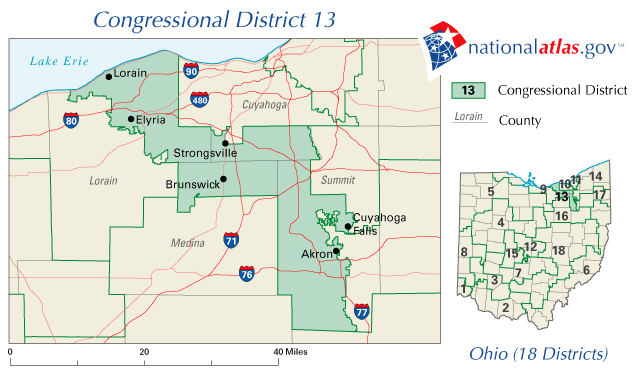
As far as the fairness issue is concerned, the Akron Press Club and Bliss Institute has hosted a number of debates over the last few election cycles including a 2006 debate in the 13th Congressional District and a 2008 debate in the 16th Congressional District. We have never heard complaints that we were somehow biased or unfair in the way we conducted those and other events. Quite the contrary. We pride ourselves on our neutrality--any hint of bias or unfairness would be counterproductive and hurt our ability in the future to host these types of events which we view as a public service above all else. I, personally, have worked very hard in the past, and would have done so in this case, to ensure that both campaigns were okay with the rules and regulations before proceeding. No debate would have commenced unless both campaigns signed off on everything following what would have been intense negotiation insuring the fairest process possible.

Tom Ganley's Appearance at Akron Press Club

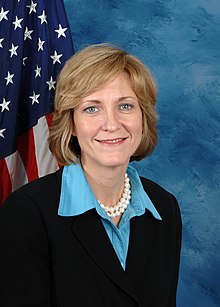
Congressional candidate, Tom Ganley, the Republican candidate for Ohio's 13th Congressional District, spoke at a luncheon sponsored by the Akron Press Club and Ray C. Bliss Institute of Applied Politics at The University of Akron.

You can access the unedited video here

He spoke for about 15 minutes and then answered questions for a little over a half hour.

Ganley's opponent, Betty Sutton, spoke at the same venue on October 20.


Wednesday, October 20, 2010

Betty Sutton's Appearance at Akron Press Club

Congresswoman Betty Sutton, the Democratic candidate for reelection to Ohio's 13th Congressional District, spoke at a luncheon sponsored by the Akron Press Club and Ray C. Bliss Institute of Applied Politics at The University of Akron.

You can access the unedited video here.

She spoke for a little over a half hour and than answered questions for the last half.

Tuesday, September 28, 2010

Ganley, Sutton to Appear at Akron Press Club in Separate Events


There will be no debates in the Ohio 13th Congressional District this autumn. The Ganley campaign rejected the offer from the Bliss Institute and Akron Press Club for a debate while the Sutton campaign accepted our offer almost immediately. However, we managed to get both candidates to agree to speak to the Akron Press Club in separate events in October. Both candidates will make a speech and engage in Q&A for at least 20 minutes after their speeches. It doesn't take the place of a real debate but it's the best we could do since no debates will be occurring in the 13th Congressional District this 2010 election cycle.

From the press release:

The Akron Press Club is pleased to provide a forum for the two candidates seeking to represent Ohio’s 13th Congressional District. They will speak at separate lunches, with time for questions following each presentation. Both events are cosponsored by The University of Akron’s Ray C. Bliss Institute of Applied Politics.

Democrat Betty Sutton will be the guest speaker at the Akron Press Club’s luncheon Wednesday, Oct. 20, at the University of Akron’s Martin Center. Sutton is a Barberton native who was first was elected to represent the 13th Congressional District in 2006. She was re-elected in 2008 and seeking a third term this fall. Sutton served in the Ohio House from 1993 to 2001. She was a member of the Summit County Council from 1991 to 1992 and a member of the Barberton City Council from 1990 to 1991.

Republican Tom Ganley will be the guest speaker at the Akron Press Club’s luncheon Tuesday, Oct. 26, at the University of Akron’s Martin Center. Ganley is president and CEO of the Ganley Automotive Group, the largest auto group in Ohio with 32 dealerships and more than 1,000 employees. In 2007 Ganley received the highest honor the FBI can give a civilian, the Louis E. Peters Memorial Service Award. The Cuyahoga County Police Chiefs Association named Ganley Man of the Year in 2006 for his support of law enforcement in the Cleveland area.

Details for both lunches:
· Time: Buffet luncheons begin at 11:45 a.m. Program follows.
· Place: Martin University Center, 105 Fir Hill, University of Akron campus.
· Cost: $15 for Press Club members, $20 for non-members.
· Reservations requested: Call 330-564-4211 or e-mail RSVP@cmoresearch.com

White House.gov Photo Gallery Feed

White House.gov Blog Feed

White House Flickr Photostream

Site Meter

WIKIO

Wikio - Top Blogs - Politics

Followers